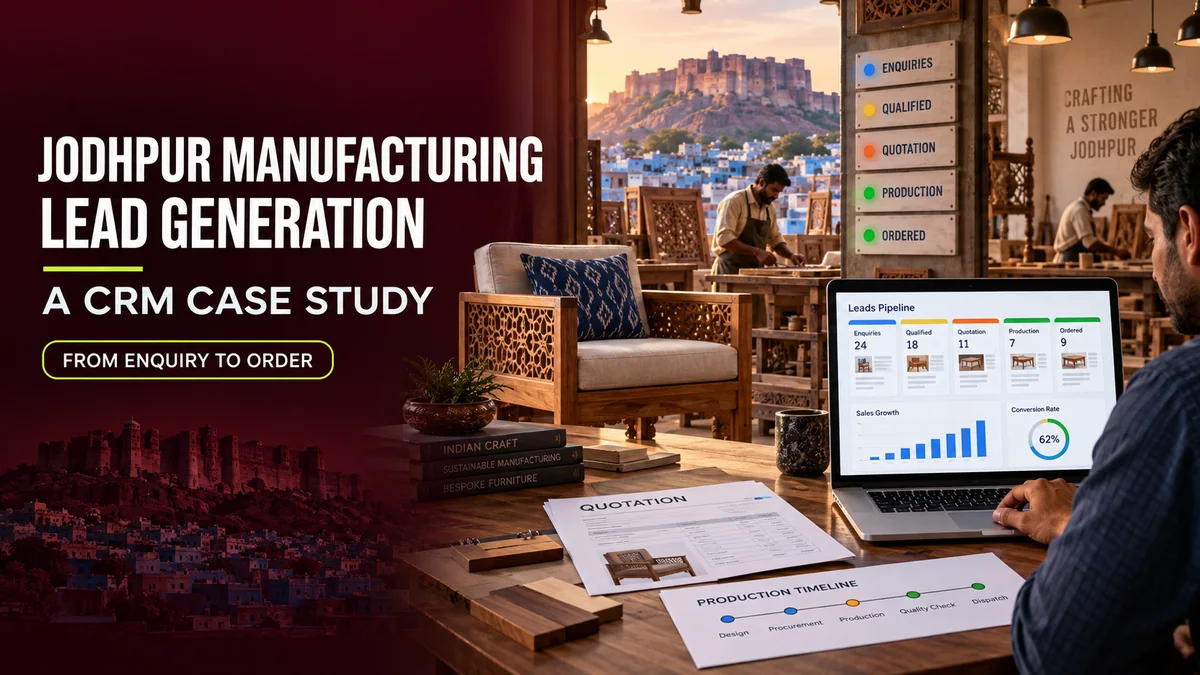
Jodhpur Manufacturing Lead Generation: A CRM Case Study
Manufacturing enquiries often contain more detail than a simple lead form: product type, quantity, dimensions, material, finish, delivery location, timeline, and commercial expectations. When that information is spread across phone calls, WhatsApp chats, spreadsheets, and quotations, the business can lose follow-ups even when demand is strong.
This is a representative CRM case study for a Jodhpur manufacturing workflow. It explains how a manufacturer can organise lead capture, qualification, quotation, production status, and customer communication without pretending that technology alone creates sales. The system supports the team; the team still owns the relationship and the commercial decision.
The starting problem: demand without shared visibility
A manufacturing team may receive enquiries from a website, marketplace, exhibition, referral, social media, phone call, or export partner. One person knows the latest conversation, another has the quotation, and production receives the requirement later. Management sees a list of opportunities but cannot tell which ones are qualified or blocked.
The first step is to document the current stages and the information needed at each stage. The goal is not to force every department into a complicated form. It is to make ownership, next action, and customer promise visible enough that a lead does not disappear between sales and operations.
- Enquiry received and source recorded
- Product, quantity, specification, and delivery need captured
- Lead qualified and assigned to an owner
- Quotation sent with a follow-up date
- Order confirmed and production milestones tracked
Designing the CRM pipeline for manufacturing
The pipeline should reflect the real decision journey: new enquiry, qualification, requirement confirmed, quotation, negotiation, order confirmed, production, quality check, dispatch, and post-sale follow-up. Each stage needs an exit condition so the team can distinguish a genuine opportunity from an incomplete request.
Custom fields should capture the details that affect the quote and delivery commitment. For furniture or craft manufacturing, that may include dimensions, material, finish, reference image, quantity, location, payment stage, and customisation notes. The fields should be useful to sales, production, and customer support—not only to the CRM administrator.
Automate the follow-up without losing the relationship
When a quotation is sent, the CRM can create a reminder, record the channel, and prepare an approved message. If the customer replies with a new requirement, the conversation can be summarised and added to the opportunity. A human decides the price, feasibility, and promise; the system makes sure the next action is not forgotten.
WhatsApp, email, and voice workflows can help collect missing information or request a callback. The handoff should include the product context and the customer’s words. This reduces repeated questions and gives the salesperson a clearer starting point.
Connect sales stages with production and delivery
A manufacturing CRM becomes more valuable when an order does not disappear after the deal is won. The confirmed requirement can create an internal job, assign milestones, and show whether design approval, procurement, production, quality checks, or dispatch is blocked. The customer-facing update should use approved status information rather than internal assumptions.
A dashboard can show open quotations, ageing opportunities, orders by stage, promised dates, and reasons for delay. This helps management act earlier while giving sales a more reliable answer when a customer asks for an update.
What to measure in the case study
Measure enquiry response time, qualification completion, quotation turnaround, follow-up completion, stage ageing, conversion by source, and the reasons opportunities are lost. For operations, track production blockers, dispatch accuracy, and the time spent answering status questions.
The purpose of the CRM is not to create an impressive dashboard. It is to reduce avoidable leakage and create a shared view of the promise made to the customer. A Jodhpur manufacturer can then decide whether the next improvement should be a new channel, a better quotation workflow, inventory visibility, or a custom portal.
Frequently Asked Questions
What should a CRM track for a Jodhpur manufacturer?
Track the enquiry source, customer and company details, product requirements, specifications, quantity, quotation, follow-up, owner, delivery need, order stage, production milestones, and post-sale communication.
Can a manufacturing CRM connect with WhatsApp?
Yes. It can capture or link conversations, send approved updates, create tasks, and pass context to a salesperson. The integration should protect customer data and keep a human responsible for pricing, negotiation, and exceptions.
Should a Jodhpur manufacturer buy generic CRM software?
A generic CRM can be a good foundation if its stages and fields fit the process. Custom software or a custom CRM layer becomes useful when quotations, specifications, production, delivery, and permissions need deeper connection.
How does CRM improve manufacturing lead generation?
A CRM does not create demand by itself. It helps the business respond to every enquiry, qualify it consistently, follow up on quotations, understand sources, and learn why opportunities are won or lost.
Is this a real client case study?
This article describes a representative Jodhpur manufacturing workflow and the CRM design decisions it requires. A real implementation should be scoped and measured against the client’s own data, process, and commercial goals.
Need help turning a repetitive workflow into a reliable system? Talk to Autozentic about AI automation, CRM software, custom software, ecommerce, voice agents, or branding for your business.